

Dragon Tiger rules are relatively straightforward because each round uses only two card positions. One card is dealt to Dragon and one card is dealt to Tiger. The higher-ranking card wins the main result.
Before a round begins, participants normally choose Dragon, Tiger or Tie. The cards are then revealed and compared immediately, so there are no additional drawing stages or complex hand combinations to calculate.
This FU88 guide explains the basic round structure, card rankings, main betting areas, optional side bets and practical limits to review before joining a table.
What Is Dragon Tiger?
Dragon Tiger is a card-comparison game built around two positions named Dragon and Tiger. Instead of forming a multi-card hand, each side receives one card.
The result is determined by comparing the rank of those two cards:
- Dragon wins when the Dragon card is higher.
- Tiger wins when the Tiger card is higher.
- Tie occurs when both cards have the same rank.
The simple structure makes each round quick to follow. However, simplicity does not remove uncertainty. Participants cannot determine which cards will be dealt before the round is completed.
Tables available through the FU88 casino section may have different limits, payout tables and optional betting areas. The information displayed inside the selected room should therefore be checked before placing a bet.
Basic Dragon Tiger Rules
A standard round consists of a betting period, two dealt cards and an immediate result. The exact interface may differ between tables, but the basic sequence remains easy to recognise.
Choose A Betting Area
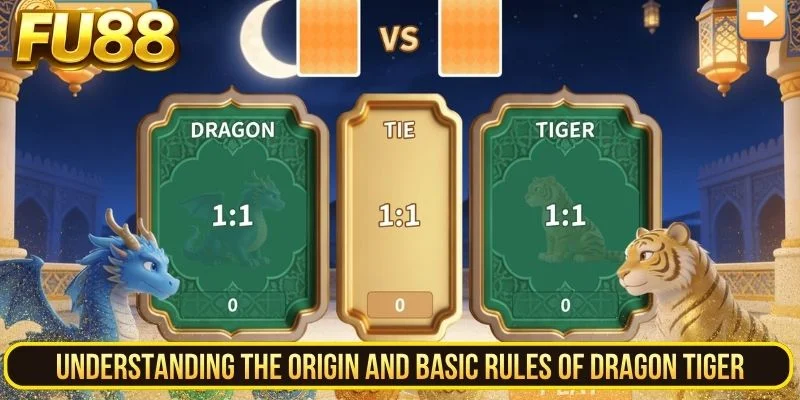
Before the countdown ends, participants select one of the available betting areas. The three main choices are:
- Dragon
- Tiger
- Tie
Some tables may also display optional side bets. These should not be confused with the main Dragon, Tiger and Tie selections.
The Betting Period Closes
Once the betting period ends, no further wagers can normally be added, removed or changed for that round.
Participants should confirm the selected area and stake before the countdown reaches zero. Rapidly changing a selection near the end of the timer can lead to accidental or duplicated bets.
One Card Is Dealt To Each Side
The dealer or game system deals one card to the Dragon position and one card to the Tiger position.
There is no Flop, Turn or River. Neither side draws another card to improve its result.
The Cards Are Compared
The card with the higher rank wins. When both cards have the same rank, the round is recorded as a Tie.
The table then settles the bets according to its displayed payout and Tie-handling rules.

Dragon Tiger Card Rankings
Dragon Tiger does not use Baccarat point totals. The two cards are compared directly by rank.
The standard order from lowest to highest is:
| Position | Card | Ranking |
|---|---|---|
| Lowest | Ace | Lowest standard rank |
| Next | 2 to 10 | Ranked in numerical order |
| Higher | Jack | Higher than 10 |
| Higher | Queen | Higher than Jack |
| Highest | King | Highest standard rank |
For example:
- A Dragon King beats a Tiger Queen.
- A Tiger 9 beats a Dragon 6.
- A Dragon Ace loses to a Tiger 2.
- Two cards of the same rank produce a Tie.
Do Card Suits Affect The Main Result?
In the standard main game, suits do not normally break a tie. A King of Hearts and a King of Clubs have the same rank, so the main result is Tie.
Some tables may use suits for a separate side bet such as Suited Tie. That optional selection should be evaluated according to the rules shown on the table.
Main Dragon Tiger Betting Areas
Dragon Bet
A Dragon bet predicts that the card dealt to the Dragon position will rank higher than the Tiger card.
If Dragon is lower, the wager loses. When the two cards are equal, settlement depends on the specific table rules.
Tiger Bet
A Tiger bet predicts that the Tiger position will receive the higher-ranking card.
The Dragon and Tiger areas normally follow the same basic comparison process. Neither side becomes more likely to win simply because it won the previous round.
Tie Bet
A Tie bet predicts that Dragon and Tiger will receive cards of the same rank.
Tie commonly displays a larger payout than the two main sides because equal-ranked cards occur less frequently. A larger displayed payout should not be interpreted as a safer or more reliable choice.
Participants should also check how a Tie affects ordinary Dragon and Tiger bets. Treatment may differ between game versions.
Optional Side Bets
Some Dragon Tiger tables include additional areas beyond the three main choices. Availability and settlement rules can vary, so only the options displayed inside the selected game should be used.
Suited Tie
A Suited Tie generally requires the Dragon and Tiger cards to have both the same rank and the same suit.
This is different from an ordinary Tie, which usually requires only matching ranks.
Dragon Or Tiger Odd And Even
Some tables allow participants to predict whether the card on a selected side will be odd or even.
Face cards and other special cases may be treated differently between providers. Check the table’s help panel before using this selection.
Dragon Or Tiger Red And Black
This side bet predicts the colour of the card dealt to the selected position.
Hearts and Diamonds are red, while Clubs and Spades are black.
Big And Small
Some game versions divide card ranks into Big and Small groups. The exact card range belonging to each group is not necessarily identical across every table.
Do not assume that one provider’s Big or Small definition applies to another. Use the displayed rule panel as the final reference.
How A Dragon Tiger Round Is Settled
After both cards are revealed, the system compares their ranks and highlights the winning result.
| Dragon Card | Tiger Card | Main Result |
|---|---|---|
| Queen | 8 | Dragon |
| 5 | Jack | Tiger |
| 10 | 10 | Tie |
| Ace | 3 | Tiger |
The payout is then calculated according to the selected betting area and the table’s published conditions.
Players should review:
- The payout for Dragon and Tiger.
- The payout for Tie.
- How ordinary bets are handled when Tie occurs.
- The payout and qualifying conditions for each side bet.
- The minimum and maximum stake permitted.
Common Dragon Tiger Terms
| Term | Meaning |
|---|---|
| Dragon | One of the two main card positions and betting areas. |
| Tiger | The second main card position and betting area. |
| Tie | A result in which Dragon and Tiger receive cards of equal rank. |
| Dealer | The person or system responsible for dealing and revealing the cards. |
| Betting period | The countdown during which participants can place or adjust bets. |
| Side bet | An optional wager based on a condition beyond the main winning side. |
| Payout | The amount returned when a wager meets the displayed winning condition. |
Patterns And Previous Results
Some tables display the outcomes of earlier rounds. This history may show sequences such as several Dragon results, alternating Dragon and Tiger outcomes or occasional Ties.
The history records completed rounds only. It does not cause or predict the next card.
Previous Dragon Results Do Not Make Tiger Due
After several Dragon results, participants may believe Tiger must appear next. The previous sequence does not force the next round to reverse.
A Winning Run Does Not Have To Continue
The opposite assumption is also unreliable. Several consecutive Tiger results do not guarantee another Tiger result.
Switching Sides Does Not Change The Cards
Automatically alternating between Dragon and Tiger may create a betting routine, but it does not influence which cards are dealt.
Results history can be used to review the table, but it should not be presented as a system that guarantees future outcomes.
Practical Bankroll Limits
Dragon Tiger rounds can move quickly, making it easy to place several bets within a short period. A predefined budget and time limit can help keep the session controlled.

Set A Session Budget Before Joining
Use only funds separated from ordinary expenses. Decide the maximum amount available before opening the table.
Use A Consistent Base Stake
A base stake makes it easier to understand how much of the session budget is being used in each round.
The amount should remain small enough that several losing rounds do not immediately consume the entire budget.
Do Not Increase Stakes After Every Loss
Increasing the wager after a loss does not make the next selection more likely to win. Repeated increases can cause the required stake to grow rapidly.
Do Not Chase A Tie Payout
The larger displayed payout on Tie or other side bets does not remove their lower frequency or specific qualifying conditions.
A participant should not repeatedly select Tie simply because it has not appeared recently.
Use A Time Limit
A time limit can be as important as a monetary limit because rapid rounds may make a session feel shorter than it actually is.
Stop when either limit is reached rather than extending the session to recover a previous result.
Common Dragon Tiger Mistakes
Using Baccarat Scoring Rules
Dragon Tiger compares the ranks of two individual cards. Participants should not add card totals or look for the side closest to nine.
Treating Jack, Queen And King As Equal
Face cards are not all treated as the same rank in the standard main game. Jack is below Queen, and Queen is below King.
Ignoring Tie Settlement
A player may understand the main comparison but overlook how a Tie affects Dragon or Tiger wagers. This condition should be checked before betting.
Confusing Main Bets With Side Bets
Big, Small, Red, Black or Suited Tie may be optional selections with separate rules. They are not replacements for the main Dragon, Tiger and Tie results.
Changing The Stake Emotionally
A previous loss or win should not automatically determine the amount placed in the next round.
Playing Too Quickly
The short betting countdown can encourage rushed decisions. Confirm the betting area and stake before submitting the selection.
Dragon Tiger Rules Checklist
Before joining a table, confirm the following:
- Dragon and Tiger each receive one card.
- The higher-ranking card wins the main result.
- Ace is low and King is high under the displayed standard ranking.
- Equal ranks produce a Tie.
- The main result does not normally use suits to break equal ranks.
- Tie settlement may affect ordinary Dragon and Tiger bets.
- Optional side bets have separate qualifying conditions.
- The minimum and maximum table stakes fit the session budget.
- Previous outcomes do not determine the next dealt cards.
Frequently Asked Questions
How Many Cards Are Dealt In Dragon Tiger?
Two cards are used for the main result. One is dealt to Dragon and one is dealt to Tiger.
Which Card Is Highest In Dragon Tiger?
King is normally the highest-ranking card, followed by Queen and Jack. Ace is the lowest-ranking card.
Does A King Count As Ten?
No. Dragon Tiger compares ranks directly. King ranks above Queen, Jack and 10.
What Happens When Both Cards Have The Same Rank?
The main result is Tie. The settlement of ordinary Dragon and Tiger bets depends on the conditions displayed by the selected table.
Does Card Suit Determine The Winner?
Suit does not normally break an equal rank for the main Dragon Tiger result. It may matter for an optional side bet such as Suited Tie.
Can Previous Results Predict The Next Round?
No. Previous results show completed rounds and do not determine the cards that will be dealt next.
Is Tie Safer Because It Has A Larger Payout?
No. A larger payout reflects different qualifying conditions and does not make the selection safer or more likely to win.
Conclusion
Dragon Tiger rules centre on a direct comparison between one Dragon card and one Tiger card. The higher rank wins, while equal ranks produce a Tie.
Players should understand the correct card order, check the table’s Tie settlement and separate optional side bets from the three main choices. Previous results do not control future cards, so stakes should remain within a predefined money and time limit.
